 dsale@topsfp.com
 العربية
 English
 русский
 español
 中文
中文



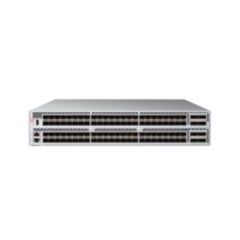
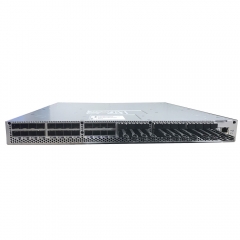
QM9790 is an externally managed Quantum-2 NDR InfiniBand switch
NVIDIA QM9790 is a fixed-configuration NDR InfiniBand switch for high-performance computing and AI fabric deployments. It should be selected from its documented system characteristics, not from market forecasts, price speculation, or general claims about GPU demand. NVIDIA’s current QM97XX documentation identifies QM9790 as a Quantum-2 based system with 64 NDR ports exposed through 32 OSFP cages. The model is externally managed or unmanaged; that distinction is central to the operational design.
A QM9790 proposal should state the exact system SKU, airflow direction, rack location, management architecture, host-adapter family, cables or optics, software baseline, and support model. Do not assume that a switch name alone provides the required management, cabling, cooling, firmware, or topology. Treat the switch, host adapters, media, and fabric software as one qualified system.
Identify the exact QM9790 variant
NVIDIA documents QM9790 variants with different airflow directions. The MQM9790-NS2F uses power-to-connector, or forward, airflow; the MQM9790-NS2R uses connector-to-power, or reverse, airflow. Both are described as Quantum-2 based, 64-port NDR systems with 32 OSFP ports and externally managed operation. Airflow must match the data-center row and rack design. A forward-airflow switch installed in a reverse-airflow row can create thermal and serviceability problems even though the port count is correct.
Confirm the offered SKU and legacy OPN against the current NVIDIA ordering information. Record the included rail kit, power-supply quantity, power-cord type, country-specific input requirements, fan modules, and any OEM labelling. If a switch is supplied through a system integrator, also confirm who owns firmware updates, hardware replacement, and escalation. These operational details are more useful than a general “AI switch” description.
Plan the NDR fabric from ports, hosts, and topology
QM9790 provides 64 non-blocking NDR ports through 32 OSFP interfaces and NVIDIA publishes a maximum aggregate throughput of up to 51.2 Tb/s for the QM97XX NDR systems. The port and media plan must be designed around the actual GPU or compute nodes. List every host adapter, link speed, connector type, cable or transceiver part number, route length, and remote switch port. Decide whether each OSFP interface is used as a full-rate NDR connection or in a supported split configuration, then document the physical mapping.
Topology is a separate design decision. NVIDIA’s Quantum-2 material describes the family as capable of supporting common InfiniBand topologies, but the appropriate topology and oversubscription ratio depend on node count, collective-communication pattern, storage traffic, redundancy, and planned growth. A small proof-of-concept fabric and a multi-rack cluster should not use the same assumptions. Build a port map before hardware is ordered and reserve capacity for management, spares, and expansion.
Design external management and firmware control
The QM9790 is externally managed rather than an in-band managed QM9700 configuration. NVIDIA states that an externally managed QM9790 can use NVIDIA Unified Fabric Manager feature sets for provisioning, monitoring, preventive troubleshooting, and maintenance. This means the management plane, management host, software licensing or entitlement where applicable, credentials, network isolation, logging, and backup procedures must be included in the project. Do not postpone fabric-management design until after the switches arrive.
Set a documented firmware baseline across switches and host adapters. NVIDIA firmware release notes publish compatibility information for Quantum-2 systems and specific adapter families. Before an upgrade, review the release notes for the exact system and adapter models, validate the proposed versions in a maintenance plan, back up the existing configuration, and define a rollback path. A change to switch firmware, adapter firmware, driver, or management software should be evaluated as a fabric change rather than as an isolated device update.
Use qualified media and validate the complete path
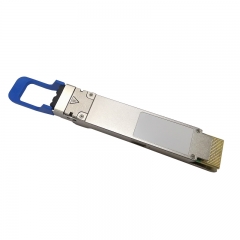
OSFP connector shape does not prove that a cable, active optical cable, or transceiver is supported. NVIDIA’s Quantum-2 release documentation explicitly states that InfiniBand cables and modules not qualified or approved by NVIDIA are not supported. Use the current compatibility material for the intended speed and remote adapter. Confirm the media type, connector, maximum reach, bend radius, operating environment, and break-out map before installation.
For each link, label the switch port, host port, cable or optic serial number where needed, and expected rate. During commissioning, inspect the connector, verify link state and negotiated speed, review error counters, and perform traffic tests that reflect the intended workload. For an AI cluster, include collective-communication and congestion tests rather than only a basic point-to-point ping. Keep the results with the fabric acceptance record.
Review rack, power, and thermal requirements
NVIDIA documents the QM9700 and QM9790 as 1U, 19-inch rack-mount systems. The current specifications also list separate operational temperature limits for forward and reverse airflow variants. Before deployment, validate rack depth, rail support, service clearance, power-feed capacity, grounding, airflow direction, hot-aisle/cold-aisle layout, and cable-management space. Dense OSFP cabling requires a planned routing path that does not obstruct airflow or make service access impractical.
Confirm that redundant power supplies and fan modules are installed and that the chosen input power arrangement meets the model’s current specification. Monitor environmental conditions after installation, especially during burn-in with active media. Make the switch location, airflow direction, and power-feed identifiers part of the asset record so future maintenance does not depend on visual inspection alone.
Use a deployment checklist before production
- Verify the exact QM9790 SKU, airflow direction, power configuration, rail kit, and lifecycle information from NVIDIA documentation.
- Create an end-to-end port map covering every host adapter, OSFP interface, cable or optic, link speed, route length, and remote port.
- Deploy the external-management plane, assign access controls, back up the fabric configuration, and document the firmware baseline.
- Use only the media and adapter combinations qualified for the planned InfiniBand speed and topology.
- Complete rack, power, thermal, link, error-counter, and workload-level acceptance testing before production use.
Use NVIDIA documentation as the source of record
Final configuration decisions must use the current documentation for the exact system and connected hardware. This guide intentionally makes no statements about pricing, inventory, supply forecasts, export policy, political developments, or projected cluster demand; those matters change independently of the switch specification and require separate, current confirmation.
Primary references: NVIDIA QM97XX user manual, NVIDIA QM9700 and QM9790 specifications, and NVIDIA QM97XX architecture and management overview. Recheck the latest compatibility and firmware documentation before procurement or a fabric upgrade.
